

How Portion-Controlled Meat Reduces Food Waste in Commercial Kitchens

Every time a chef breaks down a primal in your kitchen, you're paying for time, tolerating inconsistency and watching margin walk out the door with every offcut that hits the bin.
It's not a dramatic loss in one hit. It's the slow bleed of a 10kg scotch fillet yielding 8kg of usable product. It's the 30g variance on a hand-cut rump that compounds across 200 covers on a Saturday night. It's the prep hours that quietly consume your chef's most productive window before the first table is even seated. Whole primal receiving creates prep labour costs, weight inconsistency and avoidable food waste that stack up across every service, every week — whether you're tracking them or not.
Switching to a portion controlled meat supplier isn't a marginal upgrade. It's a structural fix that directly changes your food cost percentage, cuts your waste volumes and gives your kitchen team their time back. That's not a marketing claim — it's arithmetic.
This article breaks down exactly what portion-controlled meat means in a commercial context, how it works to reduce food waste at three specific points in your kitchen workflow, what the measurable impact looks like on food cost control in commercial kitchens, and what to look for when you're evaluating a portion controlled meat supplier in Australia.
What Is Portion-Controlled Meat?
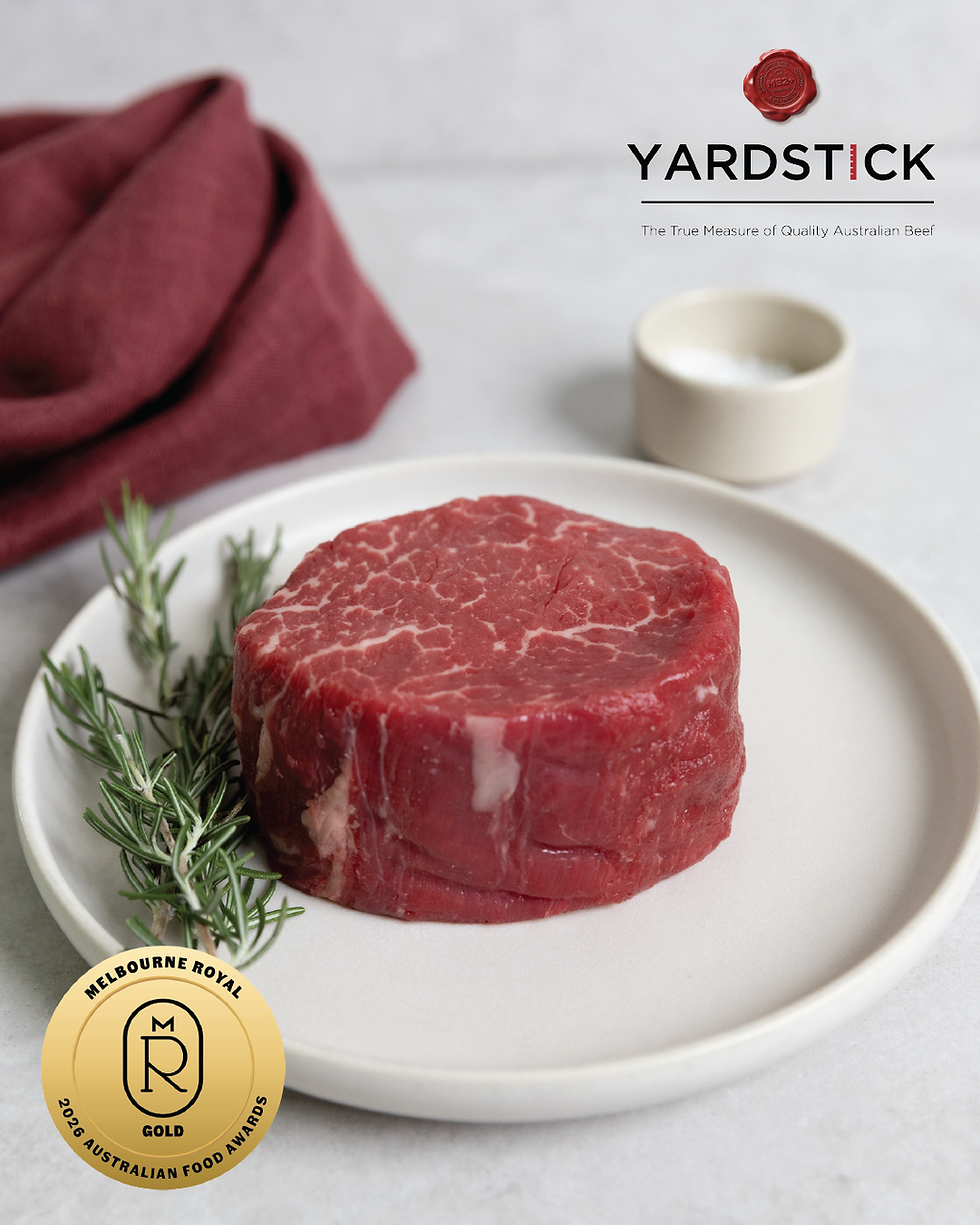
Portion-controlled meat refers to cuts that have been trimmed, weighed and prepared to an exact specification — typically per gram or per piece — before delivery to a commercial kitchen. Rather than receiving whole primals that require in-house butchery, portion-controlled supply means every steak, roast or mince portion arrives vacuum-sealed and ready to cook, at a consistent weight every time.
For commercial kitchens, this eliminates two of the biggest drivers of food waste:
Over-portioning — weight variation when staff cut by eye creates inconsistency and excess product loss that compounds across every service
Trim loss — fat, sinew and offcuts discarded during in-house butchery represent direct, unrecoverable product loss that never reaches a paying plate
The Real Cost of Food Waste in a Commercial Kitchen
Before you can fix a problem, you need to see it clearly. Most venue operators are aware food waste exists. Fewer have actually mapped where it's coming from — or put a dollar figure on it. Here's what the numbers look like when you do.
Trim Loss: The Waste You're Not Measuring
Trim loss is the most invisible line on your food cost report — because it doesn't appear on one. It doesn't show up on a waste log. It just lands in the bin, quietly, every day.
A 10kg scotch fillet primal typically carries 15–20% trim loss. That's 1.5–2kg of product you paid wholesale price for that never reaches a plate. Multiply that across three or four primals per week, across 52 weeks, and you're looking at hundreds of kilograms of paid-for beef absorbed by your bin annually.
According to the Fight Food Waste CRC, commercial kitchens are among the highest food waste generators in Australia's food supply chain — and trim loss from whole primal processing is a significant, largely untracked contributor.
Over-Portioning: The Waste You Can See But Can't Stop
Even experienced chefs vary portion weight by 10–30g when cutting by hand. It's not a skills issue — it's physics. Fatigue, speed of service and the natural irregularity of a primal make consistency impossible at scale.
At 200 covers per weekend service, a 20g average over-portion across every steak adds up to 4kg of product given away above your costed portion size. Per month, that variance becomes a measurable deviation from your budgeted food cost — and no amount of chef training resolves it, because the problem is structural, not behavioural.
A head chef at a Brisbane pub bistro put it plainly: "We had great chefs. The problem wasn't skill — it was that we were asking humans to do something a scale does better. Once we went pre-portioned, portion complaints dropped off completely."
Removing the portioning step entirely is the only reliable fix. That's what a genuine portion controlled meat supplier delivers.
Spoilage: The Waste That Hits Twice
Whole primals spend time out of vacuum during prep — being handled, broken down and stored in conditions that accelerate spoilage compared to a sealed, untouched portion. Every minute a primal sits on a prep bench at ambient kitchen temperature is a minute off its usable shelf life.
Portion-controlled cuts arrive vacuum-sealed to an industrial standard that outperforms anything achievable in a commercial kitchen. The seal is tighter, the exposure window is shorter, and the cold chain integrity from facility to your cool room is preserved. For regional Queensland operators in Townsville, Mackay or Cairns — where delivery frequency may be lower — shelf life management isn't a minor convenience. It directly determines whether your Friday order sees you through to the following Wednesday.

How a Portion Controlled Meat Supplier Eliminates Waste at the Source
Once the waste sources are mapped, the solution becomes less about spending more on supply and more about restructuring how product arrives in your kitchen.
Specification-Matched Cuts, Every Delivery
"Spec-matched" in practice means every cut leaves the facility within an agreed weight tolerance — typically ±10g — graded to an agreed standard (MSA grading, grain-fed days, marble score), vacuum-sealed, and labelled with full traceability. The variability currently absorbs in-house is handled at the facility before the truck loads.
This level of consistency requires purpose-built portioning infrastructure. It's not achievable at the scale or standard a general wholesale supplier can offer — which is why supplier scale is the differentiating factor, not just price.
Vacuum-Sealed Packaging and Shelf Life Control
Industrial vacuum sealing extends usable shelf life, reduces spoilage write-offs, and gives your kitchen more flexibility in order scheduling. Fewer emergency orders, fewer spoilage credits, and less time spent managing stock you're not confident will make it through the week.
Queensland's largest meat portioning company and Australian owned and operated — a La Carte Meats— runs this process through purpose-built cold chain logistics, which means the integrity of the seal from facility to your cool room is consistent regardless of delivery distance.
Custom Cut Profiles for Your Menu, Not a Generic Catalogue
A genuine portion controlled meat supplier doesn't ship a standard range and ask you to make it work. They cut to your kitchen's specific profile. The 220g rump you need for your pub bistro special arrives at 220g — not 200g, not 250g — every delivery, every week.
That's the operational difference between a portioning service and a wholesaler who happens to sell smaller pieces.
The Measurable Impact on Food Cost Control in Commercial Kitchens
This is where the conversation shifts from operational to financial — and where procurement buyers and operations managers tend to pay close attention.
Food Cost Percentage: What the Numbers Look Like
A pub kitchen running at 32% food cost that recovers 2–3% margin through pre-portioned supply is making a material business improvement — not a rounding error. At $500,000 in annual food spend, a 2% food cost reduction equals $10,000 returned to the bottom line. At $1 million in spend, that's $20,000.
Operators in similar-sized Queensland venues report meaningful improvements in food cost percentage within the first full quarter of switching — driven primarily by the elimination of trim loss and the removal of over-portioning variance.
Waste Reduction as a Compliance and Sustainability Signal
For institutional buyers — hospitals, aged care facilities, and mining camp operators — documented food waste reduction is no longer just a financial consideration. Sustainability reporting requirements are becoming a standard part of operational compliance, and suppliers who support that process with documented waste metrics and consistent provenance data are actively preferred.
FIAL (Food Innovation Australia Ltd) identifies food waste reduction in commercial catering as a growing priority for institutional procurement decisions. A portion-controlled supply arrangement supports that reporting and positions the kitchen as operationally mature.
What to Look for in a Portion Controlled Meat Supplier in Queensland
Not every supplier that uses the word "portioning" is running a genuine portioning operation. Here's how to tell the difference before you commit.
Scale and Stock Depth
The question that matters isn't whether a supplier can deliver your spec once — it's whether they can guarantee it every week, including during peak demand periods and supply disruptions. Ask directly: "Can you guarantee my 220g rumps are on the truck Friday morning, or will I get a substitution call at 9am?"
Queensland's largest meat portioning operation has the stock depth and logistics infrastructure to honour commitments that smaller competitors simply cannot whether it's Brisbane, Sydney, Melbourne, Darwin or Singapore, a La Carte Meats is ready to deliver.
Transparency on Grading and Specifications
Every cut should arrive with clear documentation: grade, marble score where applicable, days on grain, and weight tolerance. If a supplier cannot produce a spec sheet for every cut they sell, they are not running a genuine portioning service.
Proactive Communication and a Dedicated Account Contact
One of the deepest operational frustrations is being bounced between departments when something goes wrong. The right supplier assigns a single point of contact who knows your account, communicates proactively on availability and pricing movements, and picks up the phone.
"Our previous supplier would just short-fill the order and send a credit note. We'd find out on delivery day. Our current account manager calls us two days out if there's any movement on our regular cuts. That alone has changed how we plan our week." — Operations Manager, Queensland club.
When you're evaluating your next supplier arrangement, this checklist is the starting point — and it's the standard Queensland's leading portioning supplier is built around.
Ready to See What Pre-Portioned Supply Could Save Your Kitchen?
Discover how consistent portion control can reduce waste, protect your margins and streamline service in high-volume environments. Get in touch with Australia’s meat portioning specialists and receive a tailored cost-saving estimate based on your venue’s actual usage, menu structure and operational needs. Let’s show you how smarter meat supply can deliver measurable savings, improved yield and greater consistency across every service.