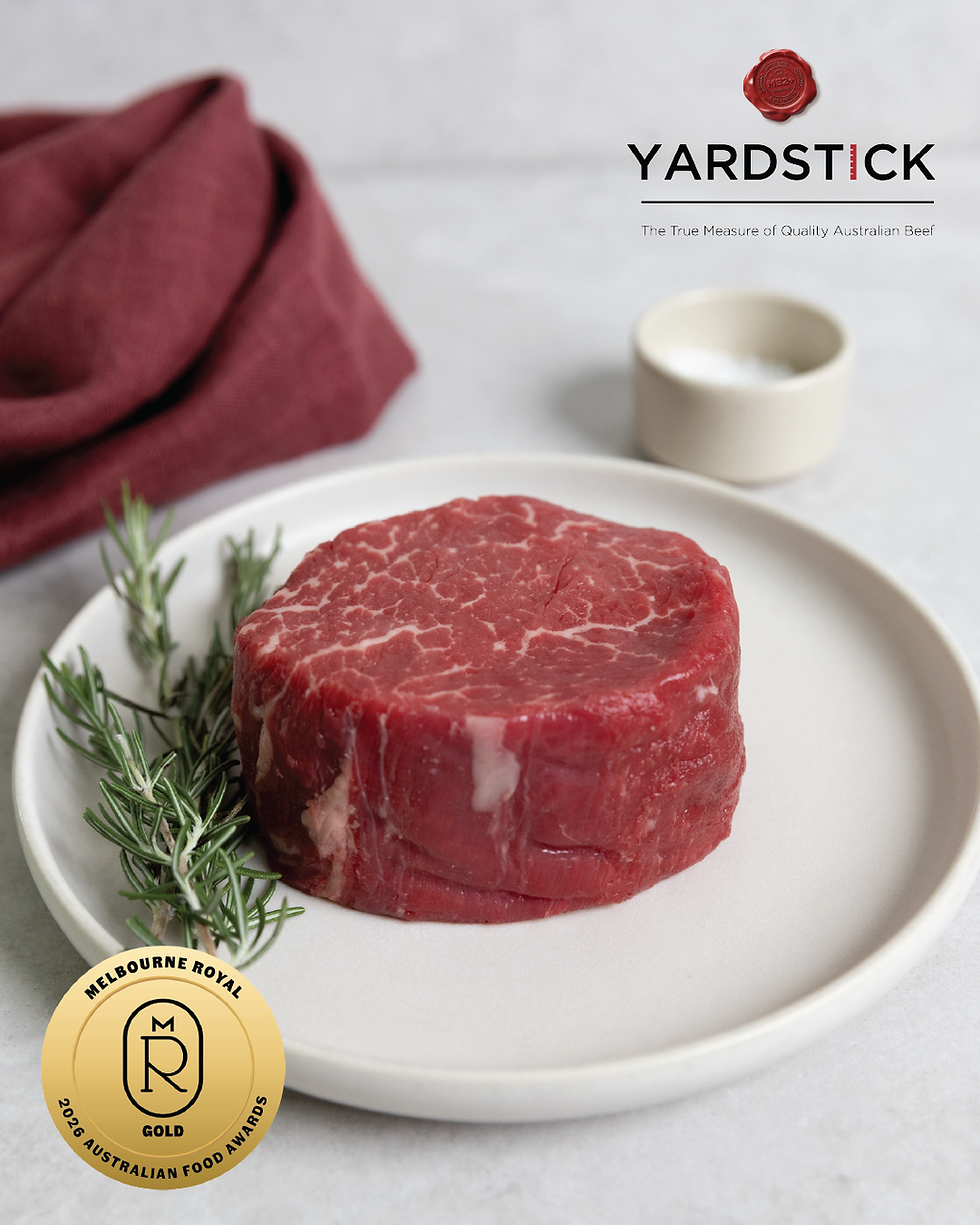


How Meat Specification Impacts Food Cost Control in Commercial Kitchens (And When Precision Becomes Too Expensive)

Most commercial kitchen operators are laser-focused on the obvious cost levers: negotiating better supplier pricing, tightening labour rosters, running tighter menus. All valid. All worth doing. But one of the most overlooked drivers of food cost blowout sits in plain sight — how you specify, portion and manage your meat.
Get the spec right and you protect your margin, reduce waste and run a more predictable operation. Get it wrong — either too loose or too tight — and you're losing money on every single service without a single alarm going off.
This article is for chefs, procurement managers and hospitality operators who want a clearer picture of how meat specification directly affects food cost control in commercial kitchens. We'll walk through what specification actually means in practice, where over-precision quietly destroys profitability, when tighter specs genuinely pay off and how to find the balance that protects your bottom line.
How Does Portion Control Affect Food Cost in Restaurants?
Portion control directly affects food cost in commercial kitchens by determining how much usable product you get from every kilogram of meat you purchase. When portions are inconsistent — even by 10–15 grams per serve — the cumulative cost across a full week of service can significantly erode margin.
Factor | Impact |
Cost predictability | Standardised portions lock in your cost-per-plate |
Waste reduction | Consistent portioning reduces trim waste and write-offs |
Yield optimisation | Pre-portioned supply eliminates in-kitchen weighing and trimming |
Profitability | Structured portion control typically recovers 2–4% in food cost |
Supplier accountability | A clear spec lets you hold your supplier to a measurable standard |
What Meat Specification Actually Means in a Commercial Kitchen
A meat spec isn't just a number on a purchase order. It's a set of instructions that tells your supplier exactly what you need — portion weight, cut style, trim level, grade and packaging. Done properly, it's the foundation of cost-per-plate accuracy. Done poorly, it's the source of margin leakage that's almost impossible to trace.
Most kitchens operate on informal specs — a rough idea of what they want, passed down through kitchen culture rather than documented standards. That's where the problem starts. Without a documented spec, there's no consistent benchmark. Without a benchmark, yield varies. And when yield varies, your food cost floats — sometimes in your favour, usually not.
The connection between spec and cost is direct. A tighter trim spec means more waste per kilogram. A heavier portion tolerance means more product used per plate. Every variable in your spec has a cost attached to it and most operators have never sat down to quantify them.
The Hidden Cost of Over-Specifying Meat
Here's a scenario that plays out in commercial kitchens more often than anyone admits.
A kitchen specifies a 250g sirloin, trimmed to within 5 grams. The supplier delivers. The product arrives at 260g. The kitchen trims it back. Across 200 covers, that's 2 kilograms of trimmed beef going into the bin — product you paid for, prepped and threw away. Do that five nights a week and you've just written off 10kg of usable beef before a single plate hits the pass.
Then there's the labour cost nobody accounts for. Re-weighing, re-trimming and re-portioning in a high-volume kitchen adds minutes per cover. It pulls skilled kitchen staff away from higher-value prep. It slows the line. And because it happens in small increments, it never shows up as a line item on any cost report.
Over-specifying also puts pressure on your supplier. When specs are unrealistically tight, suppliers price in the difficulty.
When Precision in Meat Specification Is Worth Every Cent
To be clear: tighter specs aren't always the wrong call. There are specific contexts where precision pays for itself.
Fine dining and premium steak programs are the most obvious example. When a 400g Wagyu ribeye is the centrepiece of a $90 plate, the presentation, portion weight and grade consistency are part of the value proposition. Customers are paying for that exactness. Cutting corners on spec here directly affects the guest experience and, over time, your reputation.
Multi-site procurement is another case where tighter standardisation is non-negotiable. If you're running five venues under the same brand, the steak at your Sydney site needs to look and eat the same as the one in Melbourne. That requires documented specs, supplier accountability and consistent portioning across every delivery.
Wagyu and Black Angus programs also justify tighter grade specs. When the grade is part of how you're selling the product on a menu description, inconsistency in supply isn't just a kitchen problem — it's a marketing problem.

How Meat Specification Impacts Food Cost Control in Commercial Kitchens
Here's the core logic: every element of your spec has a yield implication and every yield implication has a dollar value.
Tighter trim spec → more trim waste → lower yield per kilogram → higher effective cost per portion. Loose portion tolerance → inconsistent plate weights → unpredictable food cost → inaccurate menu pricing. It's a chain reaction and it starts at the spec level.
When your supplier can't consistently deliver against your spec, the problem compounds. You can't forecast food cost accurately if your yield is shifting week to week based on what arrives off the truck. Menu pricing becomes guesswork. Margin protection becomes reactive rather than planned.
Your food cost problem may not be a kitchen problem — it may be a supply problem.
Working with a supplier who has genuine portioning capability removes the in-kitchen variable entirely. Pre-portioned cuts arrive at the exact weight and trim level your kitchen needs, ready to cook. No re-trimming. No re-weighing. No yield loss at the prep bench.
For most commercial kitchens, a 2–4% swing in food cost is the difference between healthy margin and financial pressure. With rising input and labour expenses across the hospitality sector — as reflected in data from the Australian Bureau of Statistics — even small percentage changes now have a much larger impact on overall profitability.
Finding the Right Balance — The Sweet Spot for Yield and Profitability
The goal isn't the tightest possible spec. The goal is a spec that's optimised for both yield and consistency — what you might call the sweet spot.
Loose spec → Sweet spot → Over-specified
Too loose and you're accepting unnecessary variation in your food cost. Too tight and you're generating avoidable waste and paying a premium for a standard your operation doesn't actually need.
The most practical way to close the gap between where your spec is now and where it needs to be is to work collaboratively with a portioning-capable supplier. A supplier who can pre-portion to your exact weight, trim level and grade takes the variable out of your kitchen entirely — and gives you the cost predictability that makes menu pricing and margin protection actually reliable.
The goal is margin protection, not perfection. And the right spec — built around your operation, your menu and your volume — is one of the most underrated tools for getting there.
Take Control of Food Cost at the Spec Level
Food cost control in commercial kitchens doesn’t start at the pass — it starts with your meat specification.
If your current supplier can’t consistently deliver to spec or your kitchen is absorbing trim loss and labour inefficiencies, it’s time to rethink the model.
a La Carte Meats specialises in pre-portioned, specification-driven supply built around operational efficiency.
Talk to our team about building a supply model that protects profit — not just price.