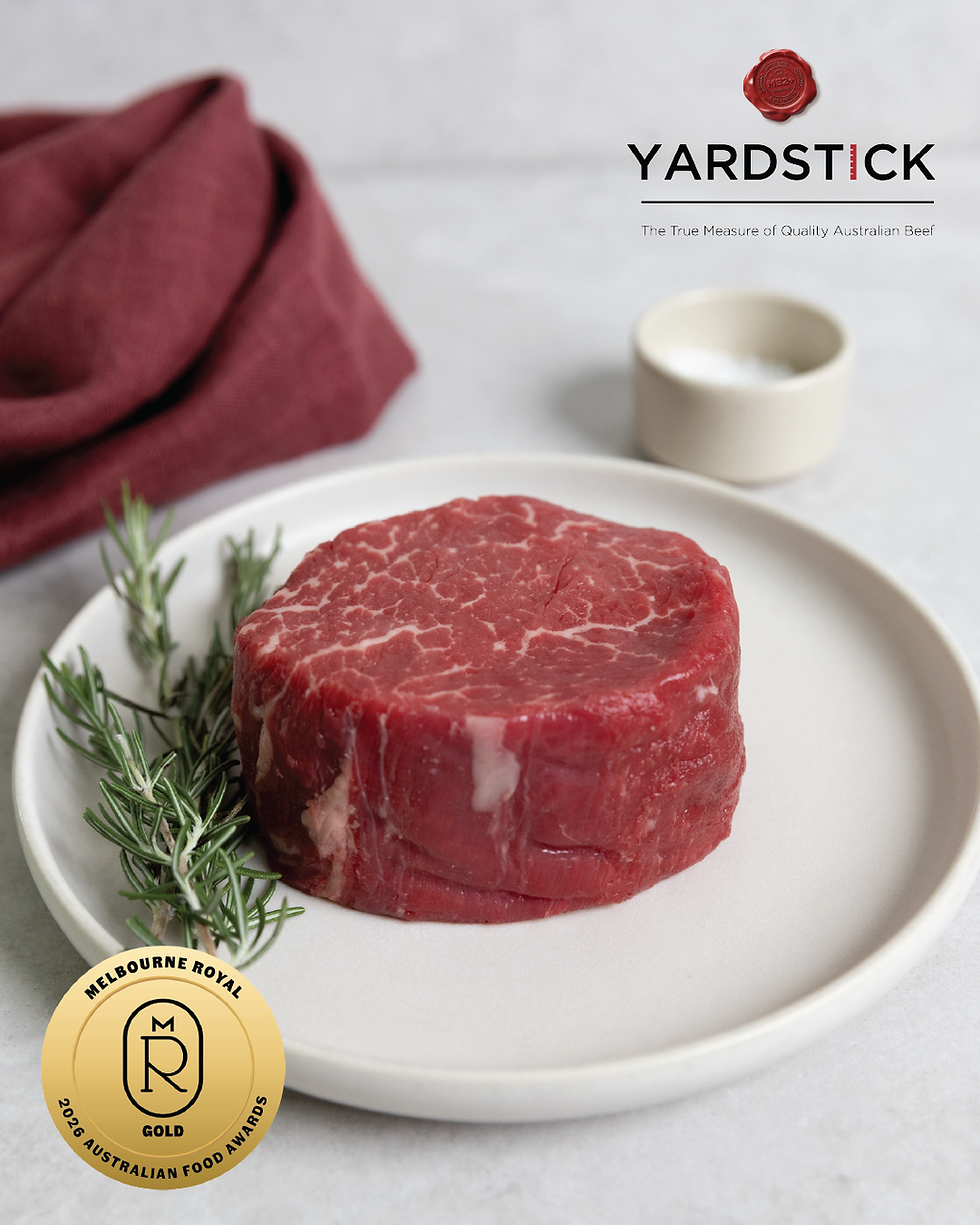


Common Steak Program Mistakes That Hurt Pub & Club Profitability

Most pub and club operators assume rising beef prices are the biggest threat to steak margins.
They're not.
The real margin erosion happens quietly, across hundreds of covers every week, through operational issues that rarely show up on a single invoice. Inconsistent portion sizes. Outdated menu pricing. Supplier variability. Poor forecasting. Individually, each one looks minor. Together, they can silently drain thousands of dollars from your steak program every month.
The good news is that none of these problems are difficult to fix once you know what to look for.
A profitable steak program for pubs and clubs isn't built on luck. It's built on systems that protect margin and maintain consistency across every service.
This article walks through the most common steak program mistakes costing pubs and clubs real money and what operators who run profitable steak menus do differently. Whether you're operating a single venue or managing a growing hospitality group, the same principle applies: a profitable steak program is built on systems, not luck.
Mistake #1: Choosing Steak Cuts Based on Preference Instead of Profitability
Many operators list cuts their kitchen likes working with, or cuts they personally enjoy, rather than cuts that actually perform on margin. It's an easy habit to fall into. You know the product, your kitchen knows how to cook it and customers seem happy enough.
But a cut that sells well is not always a cut that earns well.
When selecting cuts for your steak menu, the questions worth asking are:
What is the yield percentage on this cut after trimming?
Does the portion size justify the price point on your current menu?
How does this cut sit within your overall menu positioning?
Yield Matters More Than Purchase Price
This is where a lot of operators get caught out. A cheaper cut with high trim loss can actually cost more per usable kilogram than a premium cut with a cleaner yield. If you're comparing suppliers or cuts purely on price per kilogram, you're working with an incomplete picture.
Understanding yield before you commit to a cut is one of the simplest ways to protect margin without changing anything else about your menu.
For a deeper look at which cuts perform best commercially, The Most Profitable Steak Cuts for High-Volume Pubs and Clubs is worth reading before your next menu review.
Mistake #2: Allowing Portion Sizes to Drift
When kitchen staff estimate weight by eye, portions drift. It happens in every kitchen and becomes more common during busy service periods when speed takes priority over precision.
Even experienced cooks can be inconsistent across a full night's covers. One steak goes out at 250g, the next at 270g. Nobody notices in the moment, but across hundreds of covers, those extra grams become a significant food cost issue.
Portion drift is a service-level problem. The venue has a target specification, but inconsistent execution causes margin to leak over time.
The Maths Behind the Margin Leak
The numbers are straightforward and they're worth sitting with:
Steaks Per Week | Over-Portion Per Steak | Beef Cost Example Per kg | Weekly Loss | Annual Loss |
50 | 20g | $25 | $26 | $1,352 |
100 | 20g | $25 | $52 | $2,704 |
200 | 20g | $25 | $104 | $5,408 |
That's a single venue. If you're running two or three venues with the same portioning habits, the annual figure becomes a real conversation to have with your accountant.
The fix isn't complicated. It starts at the supplier level, with product that arrives already portioned to spec.
Mistake #3: Ignoring Trim Loss When Comparing Suppliers
Most operators compare suppliers on price per kilogram. The problem is that price alone doesn't tell you what a steak will actually cost to serve.
Two suppliers can quote the same price, but deliver very different yields depending on trimming standards and product preparation. Excess fat, sinew and inconsistent specifications create waste that your kitchen absorbs in labour and food cost. Industry guidance from Meat & Livestock Australia highlights how yield and trim specifications can directly affect the amount of usable product available for service.
When reviewing suppliers, focus on usable yield, not just invoice price. The cheapest product on paper isn't always the most profitable on the plate.
Mistake #4: Treating Steak as a Menu Item Instead of a Menu Strategy
A steak on the menu is not just a dish. It's a commercial decision that affects average spend, margin mix and how your venue positions premium menu items and captures revenue across different price points.
The operators running the most profitable steak programs don't just list cuts. They build a steak tier where every cut serves a distinct commercial purpose:
Cut | Role on the Menu |
Rump | Accessible entry point. Drives volume and reinforces value perception. |
Sirloin | Mid-tier quality signal. Strong margin performer and reliable upsell. |
Scotch Fillet | Anchor item. Justifies premium positioning and lifts average spend. |
A well-structured steak tier gives customers options at different price points while helping venues maximise revenue and margin. Each cut has a role to play and together they create a stronger commercial outcome than relying on a single steak offer.
Mistake #5: Asking the Wrong Questions at Supplier Review Time
Price is one input. It should not be the only question asked during a supplier review.
Most operators go into a supplier conversation with one thing on their mind: can you beat my current price per kilogram? That's a reasonable place to start, but it's a poor place to finish. A wholesale meat supplier who wins on price and loses on every other measure will cost you more in the long run than a slightly higher invoice ever would.
When you're reviewing your steak supplier, here are the questions that actually protect your program:
Can you supply to a consistent portion specification, week in, week out?
What is your delivery reliability record, particularly on Fridays?
Can you scale supply if we open additional venues?
Do you offer custom portioning to our exact specs?
What food safety certifications and traceability documentation can you provide?
Operators who ask better questions get better supply arrangements. A supplier should be able to answer each of these questions clearly and confidently. If they can't, it's worth reconsidering whether they're the right long-term partner for your venue.
Mistake #6: Not Reviewing Your Steak Program for Pubs and Clubs Regularly

Many venues build a steak menu once and leave it unchanged for years. The cuts stay the same, the portions stay the same and the pricing stays the same, long after the costs that underpin it have moved on.
A steak program that isn't reviewed regularly is a steak program that quietly stops working.
At minimum, a proper review should cover:
Portion audits: Are kitchen weights still matching the spec you set? Or has drift crept back in?
Menu pricing review: Does your current pricing still reflect what beef is actually costing you?
Cut performance review: Which cuts are earning their place on the menu and which ones are underperforming?
The recommendation is at least an annual review of the full program, with quarterly checks on pricing and portion compliance. Neither takes long. Both protect margin in ways that are easy to quantify once you start looking.
The operators who run consistently profitable steak programs aren't necessarily buying better beef than everyone else. They're just paying closer attention to whether the program is still doing what it's supposed to do.
Mistake #7: Not Using Portion-Controlled Product
What Portion-Controlled Supply Actually Delivers
Portion-controlled meat is one of the most straightforward operational upgrades a pub or club kitchen can make, yet it's still underused across the industry.
Here's what it actually delivers in practice:
Consistent plate weight across every service, every venue
Reduced prep time and kitchen labour
Less waste from over-trimming or over-portioning at the pass
Easier ordering and forecasting: you know exactly how many portions are in every box
Tighter food cost management across multiple sites without relying on kitchen discipline alone
For multi-venue operators, that last point matters enormously. Standardising portion spec across sites removes one of the hardest variables to manage at scale.
Build a More Profitable Steak Program With a La Carte Meats
a La Carte Meats is Australia's largest foodservice meat portioning company, supplying pubs, clubs, hotels and multi-site operators across all the states.
If your steak program has any of the issues covered in this article, whether that's portion inconsistency, supplier reliability or menu structure, the place to start is a conversation about what a properly structured supply arrangement actually looks like for your venue.
a La Carte Meats offers:
Custom portioning to your exact specifications
Consistent supply across QLD, NSW, VIC, SA, ACT and NT
Full product traceability from farm to plate
A product range covering everything from pub-friendly rump through to Wagyu and Black Angus for premium menu tiers
A profitable steak program is built on systems, not luck. Get in touch with the a La Carte Meats team to talk through what that looks like for your venue.