

Premium vs Standard Beef Cuts: Cost vs Margin for Commercial Kitchens

Choosing between premium and standard beef cuts isn't just a quality decision — it's a margin decision. Get it wrong and you're either leaving money on the table or bleeding profit on every plate without a clear reason why.
The cut you choose directly impacts your food cost, menu pricing strategy and overall restaurant margins. Whether you're running a high-volume pub bistro, a hotel restaurant or a large catering operation, the cut you choose — and how meats are portioned — determines what lands in your pocket at the end of service.
This guide breaks down the real cost difference of premium vs standard beef, how each affects your menu pricing and perceived value, and where portion control becomes the variable that protects your margins regardless of which cut you're working with.
What's the Difference Between Premium vs Standard Beef Cuts?
Understanding what makes a cut premium is only half the picture — the real question is what it costs you per plate.
For commercial kitchens, the key differences are:
Marbling: Premium cuts carry significantly more intramuscular fat, delivering better texture and eating experience
Tenderness: Premium beef comes from younger, specially fed cattle — less prep time required
Price point: Premium cuts typically cost 2–3x more per kilogram
Best use: Premium for steaks and signature dishes; standard for volume and versatility
Margin impact: Premium commands higher menu prices; standard protects food cost on volume items
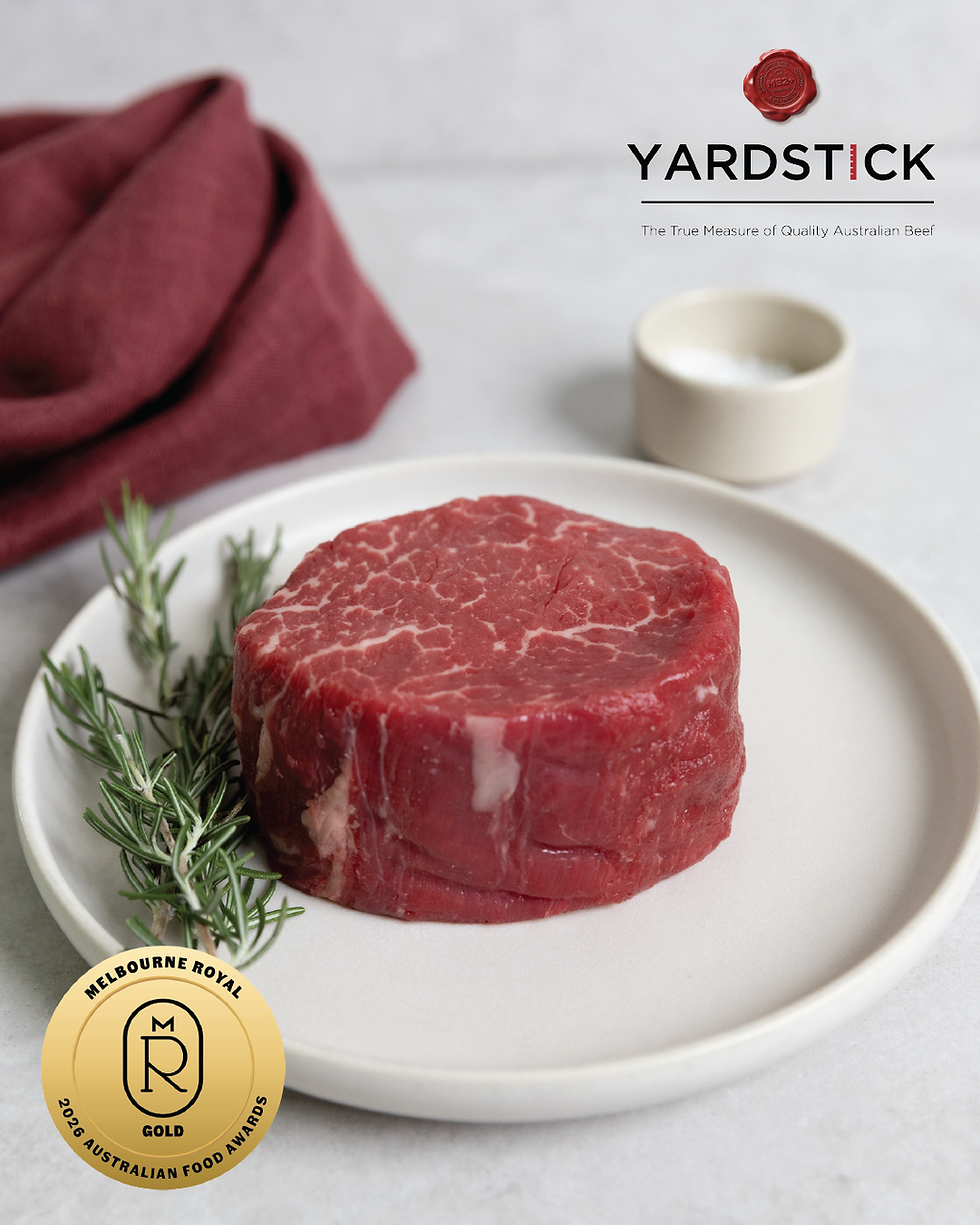
Premium Cuts — Wagyu, Black Angus, Grass Fed & Grain Fed
In the Australian wholesale market, premium beef sits across four main categories — Wagyu, Black Angus, grass fed and grain fed. Each has a distinct profile, but they share one thing: marbling.
Marbling is the intramuscular fat running through the muscle and it's what delivers the flavour, tenderness and plate presentation that justifies a higher menu price. Wagyu carries the highest marbling scores — rated on the Marble Beef Score (MBS) scale from 4 through to 9+ — and delivers a richness that's immediately noticeable on the plate. Black Angus is prized for consistent eating quality and breed-specific flavour. Grain and grass fed beef offers reliable marbling and tenderness across a wide range of cuts, making them a strong performer for mid-to-premium menus.
Organisations like Meat & Livestock Australia play a key role in defining these standards, particularly through marbling scores and eating quality benchmarks used across the industry.
Standard Cuts — Commodity Beef for Volume Kitchens
Standard beef — think chuck, round, topside and blade — is the workhorse of high-volume commercial kitchens. Leaner, more affordable and when cooked correctly, they perform exceptionally well across a wide range of menu applications.
Standard cuts reward the right cooking method. Slow-cooked, braised, minced or schnitzel'd — these cuts earn their place on the menu and protect your food cost on volume items. Standard beef isn't inferior. It's a different strategic role in your kitchen.
Where Kitchens Lose Margin Without Knowing It
The key is consistent portioning. In most commercial kitchens, that's the assumption that quietly breaks down.
Inconsistent portioning adds $1–3 per plate in untracked waste. Over-ordering premium cuts leads to spoilage. Under-portioning standard cuts damages customer perception. The cut isn't always the margin problem — portion control is.
How Premium vs Standard Beef Cuts Affect Menu Pricing and Perceived Value
The choice between premium and standard beef cuts isn’t just a matter of quality — it directly impacts menu pricing, customer perception and overall brand positioning.
Premium Cuts
Menu Pricing: Allows higher price points due to superior quality and exclusivity.
Perceived Value: Guests associate premium cuts like Wagyu or Black Angus with luxury dining experiences.
Brand Impact: Elevates the restaurant’s reputation, helping signature dishes stand out.
Standard Cuts
Menu Pricing: Lower cost per portion supports affordable, high-volume menu items.
Perceived Value: Focus is on consistency and portion reliability rather than luxury.
Brand Impact: Maintains steady food cost and service speed, essential for pubs, bistros and high-turnover kitchens.
Key Insight: Smart kitchens balance the two — using premium cuts for signature dishes that justify higher prices and standard cuts for volume items where consistency and cost control matter most.
When Standard Cuts Deliver Better Margins

The High-Volume Kitchen Case
For pubs, clubs and bistros, volume is the margin engine. Eighty covers at $28 a steak versus thirty covers at $55 Wagyu — the Wagyu looks impressive until you factor in food cost per plate and the reality that not every service sells out the premium section.
Standard cuts at the right food cost percentage, moving at volume, consistently outperform premium on total margin per service. It's about knowing which cut matches the operation you're actually running.
Best Menu Applications for Standard Beef
Burgers — high perceived value, low cost per portion
Slow-cooked dishes — braises and pulled beef convert cheaper cuts into premium-feeling dishes
Schnitzels — a pub staple with strong menu price retention
Stir-fries and curries — reliable food cost with strong customer satisfaction
Mince-based dishes — bolognese, cottage pie, meatballs
Choosing the Right Mix for Your Kitchen
Premium cuts drive margin per plate and brand positioning. Standard cuts drive volume, stability and consistent food cost percentage. The best commercial kitchens use both — premium for signature dishes, standard for volume items.
Premium vs Standard Beef Cuts — Practical Comparison
Factor | Premium Beef Cuts | Standard Beef Cuts |
Typical Use | Signature dishes, specials, steak menu highlights | High-volume menu items, everyday service |
Cost per Portion | Higher upfront cost | Lower, more predictable cost |
Menu Pricing Power | Strong — supports premium pricing | Limited — price-sensitive menu items |
Margin per Plate | Higher margin potential | Lower margin per plate |
Volume Sales | Lower volume, higher value | High volume, consistent turnover |
Food Cost Control | Requires strict portion control | Easier to maintain consistency |
Brand Impact | Elevates perception and positioning | Supports consistency and accessibility |
Best For | Upscale venues, signature offerings | Pubs, bistros, high-cover kitchens |
Premium vs Standard Beef Cuts: Protect Your Margins Today
Choosing the right beef cut isn’t just about quality — it’s about controlling costs, maximising margin and delivering consistent dishes every service.
a La Carte Meats provides expertise, a huge range of cuts and products, and the benefit of enormous buying power. We work with commercial kitchens of all kinds across Australia providing premium and standard beef reliably, so your plates maintain quality, your menus stay consistent and your margins stay protected.
Take the guesswork out of your beef supply — speak with our team today to find the right mix for your kitchen.