

Where to Source Wholesale Australian Beef (And What to Ask Before Partnering with a Supplier)

Sourcing wholesale Australian beef for a commercial kitchen, an aged care group, a mining camp or a multi-site hospitality business isn't complicated once you understand how the supply chain actually works. The problem is that most buyers enter the market without that understanding. They Google a supplier, get a quote that looks reasonable and assume the business on the other end has the processing capability, compliance documentation and volume capacity to back it up.
Sometimes they do. Often they don't.
This guide breaks down where wholesale Australian beef actually comes from, the real difference between a processor and a trader, what export accreditation means for your compliance requirements and the specific questions that separate a reliable supply partner from one that's going to leave your kitchen short on a Friday afternoon.
Understanding the Wholesale Australian Beef Supply Chain
Australian beef moves through five stages before it reaches a commercial kitchen: cattle station → feedlot (for grain-fed product) → licensed abattoir → processing and portioning facility → wholesale distribution → commercial buyer.
Where a supplier sits in that chain determines what they can actually deliver. A business operating at the processing and portioning stage has a fundamentally different capability set to one operating purely at the distribution end — even if both call themselves wholesale suppliers.
Queensland alone accounts for roughly 40% of national cattle production, which is why QLD-based suppliers carry real weight in domestic wholesale markets and export supply chains. At the compliance end, export-accredited facilities operate under DAFF — the Department of Agriculture, Fisheries and Forestry — oversight.
Not every business calling itself a wholesale beef supplier touches product at processing level. Many are intermediaries — and that distinction matters more than most buyers realise.
Where Buyers Actually Source Wholesale Australian Beef Today
In practice, most commercial buyers source Australian beef through a few key channels, depending on their volume needs, compliance requirements and level of supply control.
Direct from export-accredited processors is the preferred option for large hospitality groups, institutions and export buyers. This offers the strongest consistency, traceability and specification control, but usually requires committed volumes and structured supply agreements.
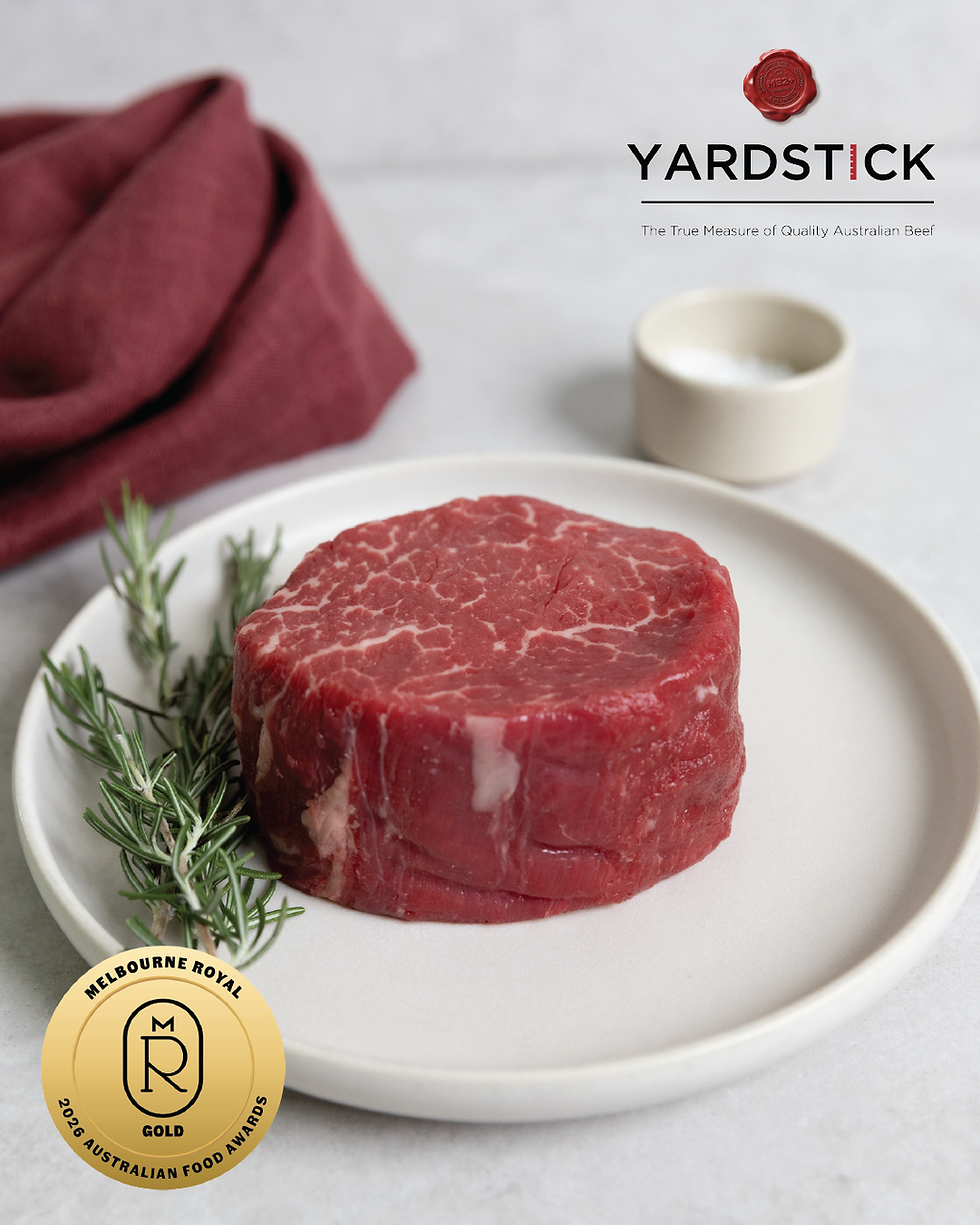
Portion-control specialists are increasingly popular with high-volume kitchens. These suppliers provide pre-portioned beef to exact specifications, helping reduce labour costs, improve yield consistency and minimise waste.
National wholesale distributors are commonly used by independent venues and mid-sized operators. They offer convenience and range, though product traceability and processing control can vary.
Trading companies and spot-market suppliers are typically used for short-term gaps or opportunistic pricing, but they offer less stability in allocation and specification consistency.
How Bulk Australian Beef Is Sourced Across Different Supplier Types
Most commercial buyers source bulk Australian beef through one of five channels:
Supplier Type | Volume Capability | Compliance Documentation | Portioning Capability | Best Suited For |
Direct from processor | High | Strong | Yes | Multi-site procurement buyers |
National wholesale distributor | Medium–High | Variable | Limited | Buyers needing category flexibility |
Portion-control specialist | Medium–High | Strong | Yes | High-volume hospitality, institutions |
Trading company | Variable | Limited | Rarely | Spot purchases only |
Interstate supplier | Variable | Variable | Variable | Buyers in thin local markets |
Processor vs Trader: What's the Difference?
This distinction is worth understanding clearly before you commit to any supply relationship.
A processor owns or operates a licensed facility where cattle are broken down, portioned and packed. They control the product from carcass to carton. A trader purchases processed product from one or more facilities and resells it — they have no control over processing standards, portioning or cold chain at source.
For buyers building a long-term supply relationship, that gap carries real operational risk. Processors can guarantee spec consistency because they control the cut. Traders are exposed to supply variability when their sources run dry — and during peak demand periods, they're first to experience allocation shortfalls. Compliance documentation is also harder to obtain through a trader.
Domestic vs Export-Accredited Suppliers
Not all licensed processing facilities are equal from a compliance standpoint.
Domestic-only licensed facilities meet Australian food safety standards but operate under a lighter compliance framework. Export-accredited facilities are DAFF-registered and carry full traceability from farm to carton — a stricter federal standard that produces deeper documentation.
For procurement buyers in regulated industries — aged care, hospitals, airlines, mining — export-accredited suppliers provide the audit trail depth that internal compliance requirements demand. For meat buyers sourcing for Southeast Asian markets, including Thailand, Singapore, Hong Kong and Vietnam, export accreditation is non-negotiable. Certificates of origin, health certificates and cold chain documentation are mandatory at the import end.
One important nuance: export accreditation doesn't automatically mean higher product quality. It means higher compliance and documentation standards.
Questions to Ask Before Partnering with a Wholesale Beef Supplier Australia
Operational Capability
What is your weekly processing volume and can you sustain that during peak demand?
Do you own and operate your processing facility or are you sourcing from third parties?
What states do you service and what are your delivery lead times to each?
Portioning & Specification
Can you portion to our exact weight specification and what is the tolerance range?
What is your minimum order volume for portioned product?
How do you handle spec changes across a multi-site supply agreement?
Supply Continuity
What is your contingency when primary product allocation is disrupted?
Have you serviced buyers of comparable volume?
How do you manage price volatility — do you offer fixed-price supply windows?
Common Mistakes When Sourcing Bulk Australian Beef
Choosing on price alone. A low quote from a trader with no processing capability looks attractive until the first allocation shortfall. Price is one input — volume capacity, spec consistency and compliance documentation are the others.
Not asking where the product actually comes from. Many buyers assume their supplier is processing the product themselves. Often they're not. One direct question — do you own and operate your processing facility? — tells you everything you need to know.
Skipping compliance checks until an audit forces the issue. Cold chain records, traceability documentation and export accreditation should be requested before you sign, not after a gap gets flagged.
Underestimating the cost of portioning inconsistency. Buyers focused on the per-kilo price often overlook what inconsistent portioning costs at the kitchen end — in labour, wastage and plate cost variance.
What Reliable Wholesale Australian Beef Supply Looks Like in Practice
Reliable Australian beef supplier comes down to six things: consistent spec delivery week after week, portion precision at scale, compliance documentation available on request, proactive communication before disruptions become your problem and a supplier that understands your volume cycles without needing to be re-briefed each time. As your site count grows, their capability grows with you.
The difference between a supplier and a supply partner comes down to one thing: whether they're solving problems before you know they exist.
Ready to Strengthen Your Wholesale Beef Supply?
If you’re reviewing your current supplier or planning for growth across one or multiple sites, it’s worth speaking with a processor-level partner who understands volume, specification and delivery at scale.
a La Carte Meats is Queensland’s largest meat portioning company, supplying export-accredited beef to commercial kitchens, institutions and hospitality groups across Australia and international markets.
If you’d like to review your requirements — from portion specifications to supply continuity and delivery scheduling — we can walk through it in one straightforward conversation.
Get in touch with our team to discuss your supply needs.